
Vätternrundan 2026 is not just about having a good bike. To complete the 315 km ride around Lake Vättern, you need the right preparation: a reliable bike setup, comfortable clothing, lights for night riding, a nutrition plan, basic tools, and enough long-distance training before event day.
This guide explains what you need to prepare before Vätternrundan 2026, especially if you are riding it for the first time.
The 315 km route around Lake Vättern demands serious preparation — from bike setup to nutrition and night riding.

1. Bike Preparation
Your bike has to survive 10–20 hours of riding. Don’t leave this to the last week.
- Full bike service before the event: Book a service 3–4 weeks out. Gives time to fix issues and test-ride after.
- Brake check: Pads should have >50% life left. Cables/hoses inspected. Braking matters on descents and in groups.
- Chain and drivetrain inspection: Replace the chain if it’s past 0.5% wear. Worn drivetrains fail mid-ride.
- Tire condition: No cuts, sidewall damage, or worn tread. New tires? Fit them 200 km before to check reliability.
- Recommended tire width: 28–32 mm is the sweet spot. Comfort over 315 km beats marginal aero gains.
- Comfortable saddle: If it’s fine for 4 hours, it’s likely fine for 12. Don’t change it in June.
- Bike fit: Small issues become big ones after 200 km. Dial in position by April.
- Bottle cages: Two minimum. Check bolts are tight. Losing a bottle at 3am isn’t fun.
- Lights and mounts: Solid front light 400+ lumens, rear light with 10+ hour runtime. Bring spares or powerbank. Required for night starts.
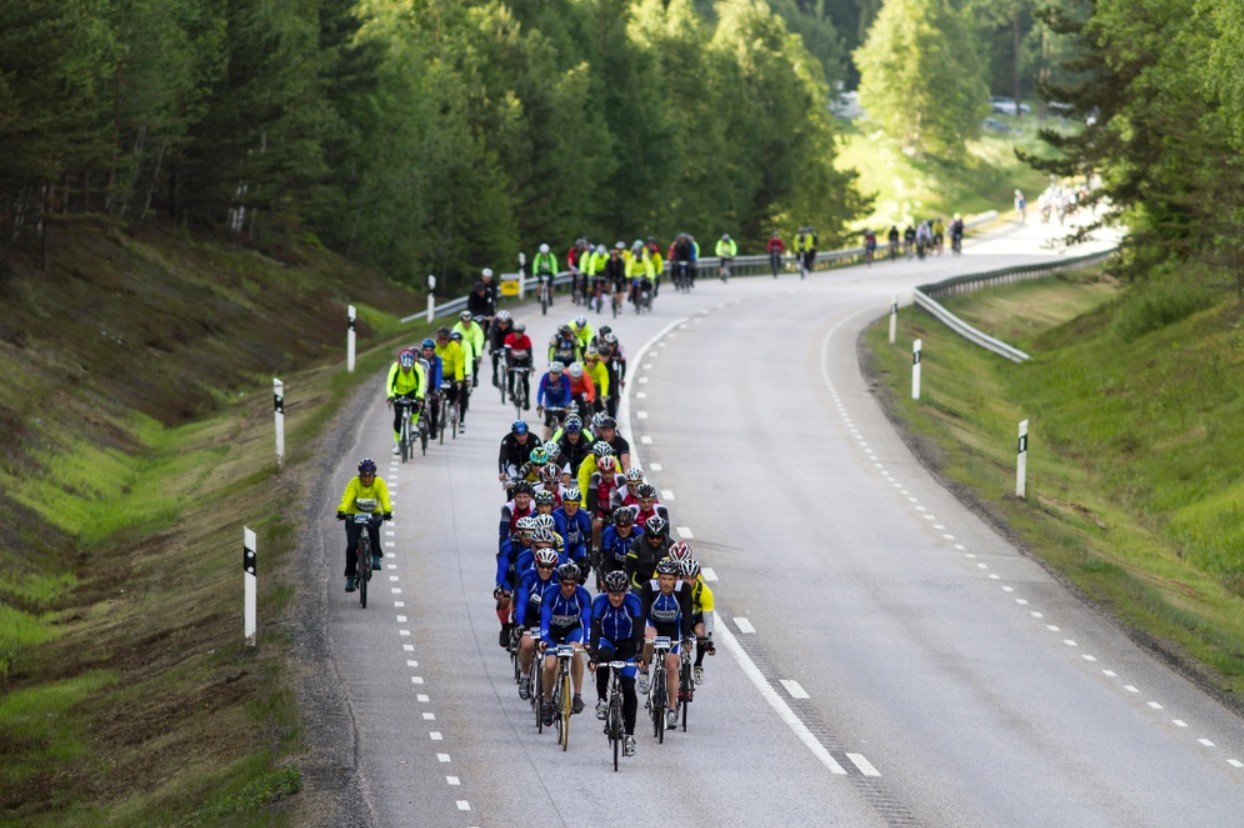 Group riding is drafting-legal at Vätternrundan — practice close riding and signaling well before event day.
2. Essential Gear Checklist
Pack these. No exceptions.
- Helmet: Must be CE approved. Carry a spare retention dial if yours is fragile.
- Front and rear lights: Required by organizers for starts before sunrise. Test runtime.
- Reflective vest or details: Mandatory during night hours. Vest, ankle bands, or jersey with reflective panels.
- Cycling gloves: Full-finger for cold starts, short-finger as backup.
- Rain jacket: Packable, waterproof, breathable. Swedish June can surprise you.
- Arm warmers or leg warmers: Easy on/off for 5°C to 20°C swings.
- Spare tubes or tubeless plugs: Two tubes or dynaplugs + sealant. One puncture is common in a field of 20,000.
- Mini pump or CO₂: CO₂ is fast, but bring a pump as backup. Two cartridges minimum.
- Multitool: Allen keys, chain tool, spoke key.
- Chain link: Quick link matched to your speed. Broken chains end rides.
- ID and payment card: For emergencies and rest stops. Put in a ziplock.
3. Clothing for Swedish Weather
Motala in June can be 4°C at 2am and 22°C by noon.
- Layering: Base layer, jersey, arm warmers, gilet. Add or remove as temps change.
- Rain protection: A good rain cape saves your ride. Wet + cold = DNF.
- Windproof vest: Core warmth without overheating. Lives in your back pocket.
- Night riding temperature changes: Expect 8–12°C drops after sunset. Plan for the coldest hour.
- Extra socks: Dry socks at 200 km feel like new legs. Keep in your drop bag.
- Gloves for cold starts or late-night sections: Lobster mitts or thermal gloves for night starters. Numb hands can’t brake.
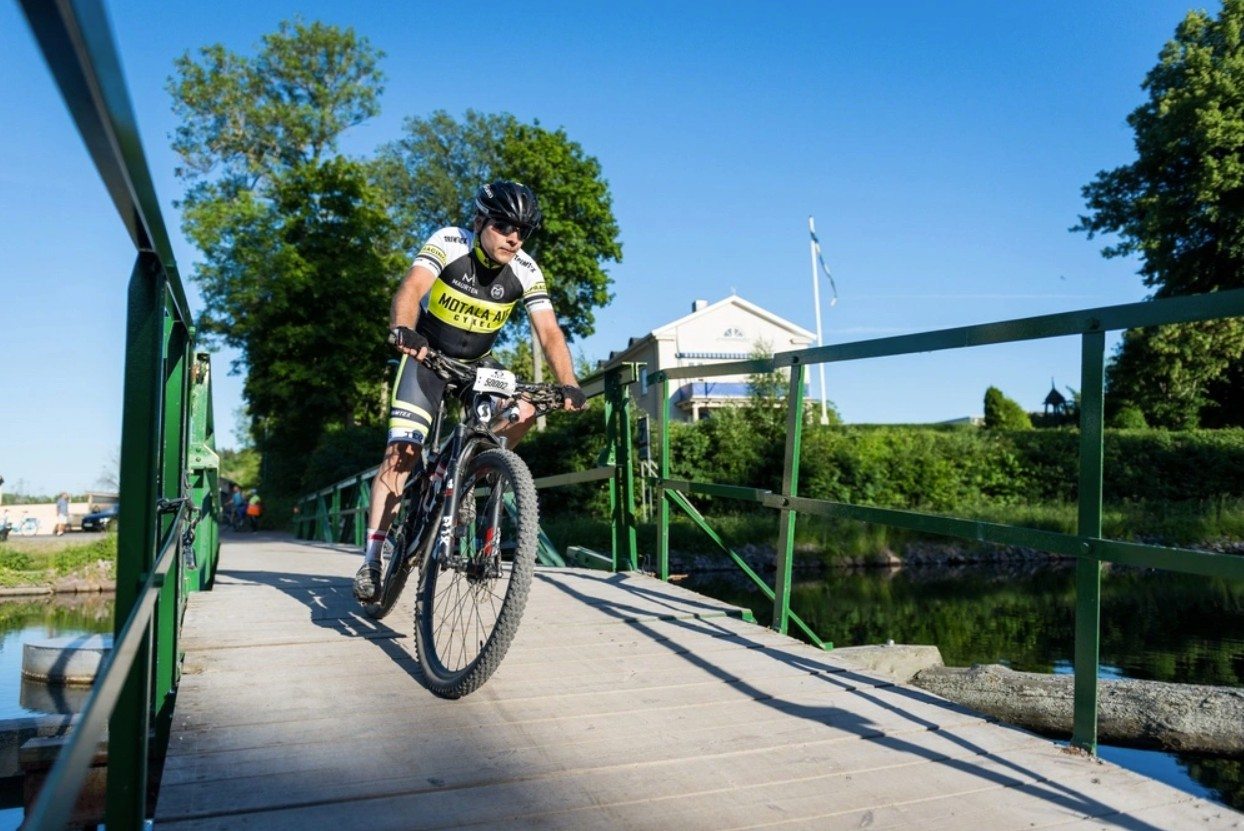
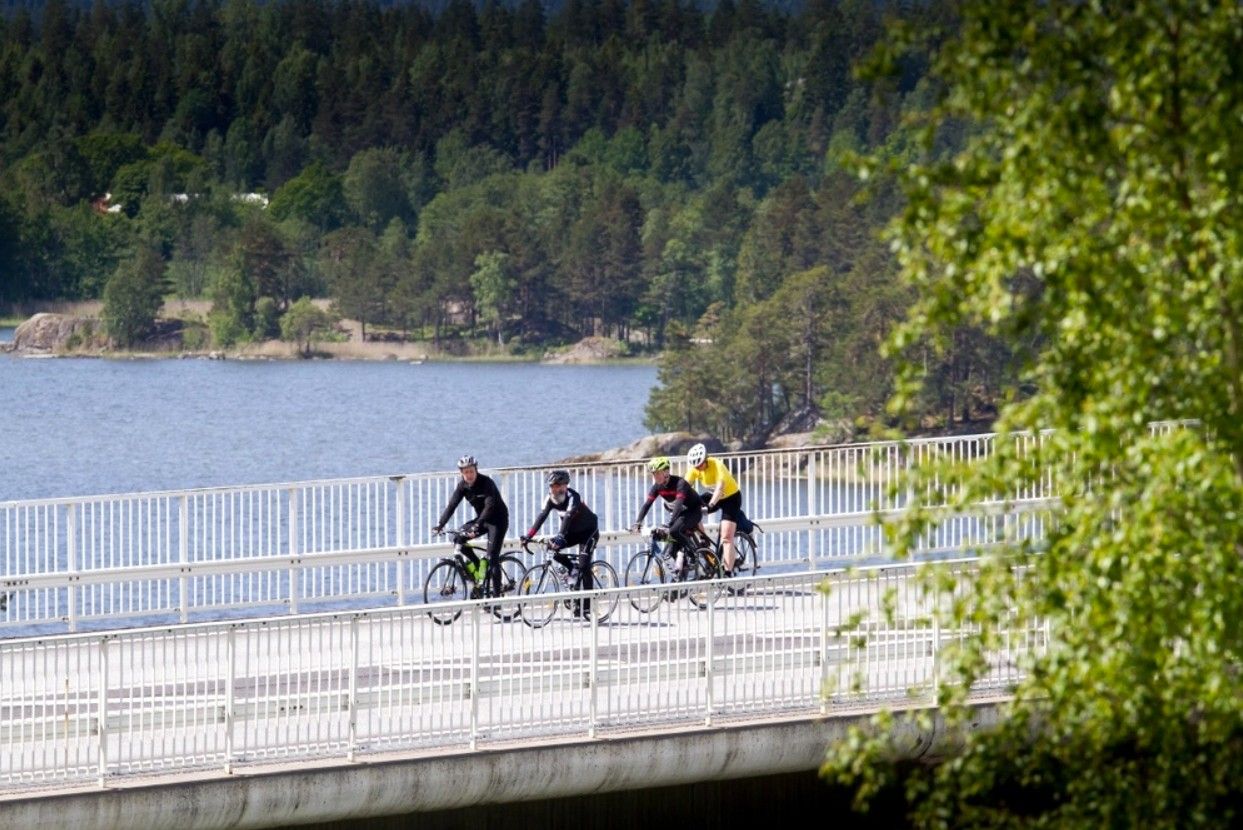 The route crosses scenic bridges and varied terrain — your clothing layers will be tested through the night and into morning.
4. Training Preparation
You can’t fake fitness for 315 km. Start by February.
- Long rides before June: Build to at least one 200 km ride 3–5 weeks out. Teaches pacing and fueling.
- Riding in groups: Vätternrundan is drafting-legal. Practice close riding, signaling, and taking turns safely.
- Pacing practice: Most people blow up by riding the first 100 km 3–4 km/h too fast. Learn your Vätternrundan pace.
- Climbing and rolling terrain: It’s not flat. ~1,500m elevation. Include hills in training.
- Recovery weeks: Taper 10–14 days out. You gain nothing from hard rides the week before.
- Practice riding at night or early morning: Get used to lights, cold, and sleepiness. A 3am start feels weird without practice.
5. Nutrition and Hydration
Your engine quits without fuel. Bonking at 250 km is preventable.
- How much to eat per hour: Target 60–90g carbs/hour. That’s 2–3 gels or one bar + one gel every hour.
- Electrolytes: Two bottles, one with electrolytes. Cramps end rides. Sweden can be humid.
- Energy bars or gels: Bring what you trained with. Rest stops have food, but don’t rely on it.
- Real food options: Bread, bananas, soup at depots. Breaks up the sugar monotony.
- Testing nutrition before event day: Every gel, bar, and mix should be tested on 4h+ rides. GI issues are ride-enders.
- Avoiding stomach problems: Don’t overdo caffeine, fiber, or new products on the day.
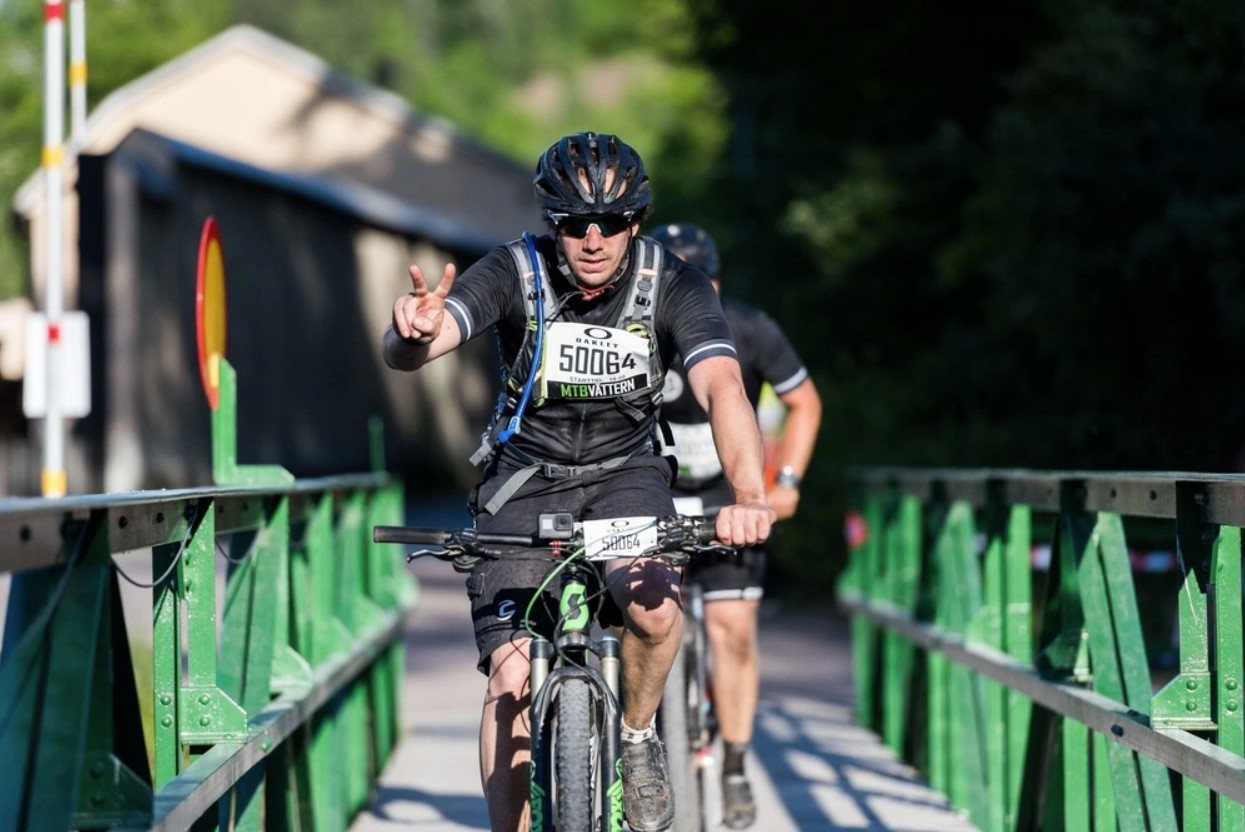 Thousands of riders line up at the start — nutrition and pacing strategy separate finishers from DNFs.
6. Ride-Day Plan
Control what you can before the gun goes off.
- Arrival in Motala: Get there at least a day before. Expo, bike check, no stress.
- Start time: Night starters need sleep strategy. Afternoon nap, early dinner. Morning starters: eat 3h before.
- Bag drop or storage: Use it. Dry clothes, extra food, battery pack for after.
- Weather check: Last look at SMHI before kit choice. Pack for worst forecast.
- Charging lights and devices: Everything 100% the night before. Headunit, phone, Di2, lights.
- Route pacing: First 100 km should feel easy. Save matches for headwinds after Jönköping.
- Rest stop strategy: Plan 3–5 short stops. 5–8 minutes max. Long stops kill your legs and time.
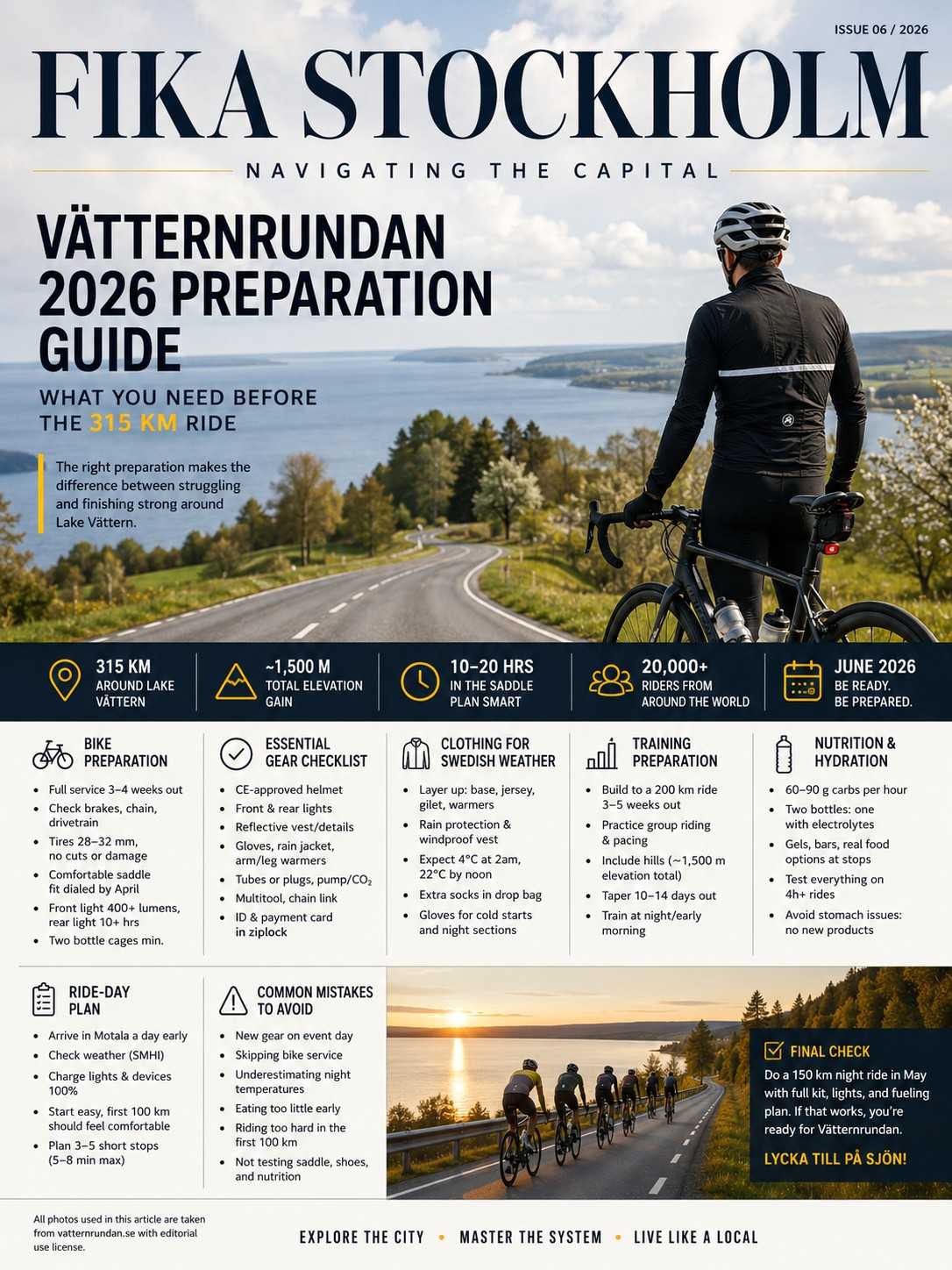 A visual breakdown of the key preparation checkpoints for Vätternrundan 2026.
7. Common Mistakes to Avoid
Learn from the 20% who DNF each year.
- Using new gear for the first time on event day: Shoes, saddle, shorts, nutrition. Everything must be tested.
- Skipping bike service: “It was fine last week” doesn’t count after 200 km in rain.
- Underestimating night temperatures: Hypothermia at 3am is real. If you start before 4am, you’ll be cold.
- Eating too little early in the ride: You can’t eat your way out of a deficit after 200 km. Start from km 0.
- Riding too hard in the first 100 km: Adrenaline + fresh legs + groups = blowup by Gränna. Discipline wins.
- Not testing saddle, shoes, and bib shorts beforehand: Hotspots at 150 km don’t go away. They get worse.
Final check: If you’re unsure, do a 150 km ride at night with full kit, lights, and fueling plan in May. If that works, Vätternrundan will too.
Lycka till vid sjön.
All photos used in this article are taken from vatternrundan.se with editorial use license.